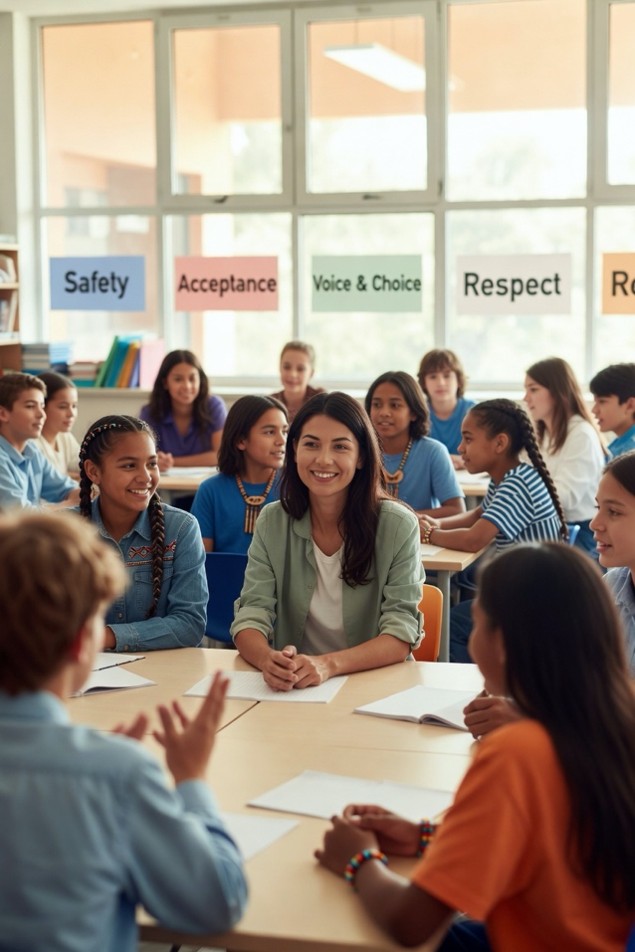
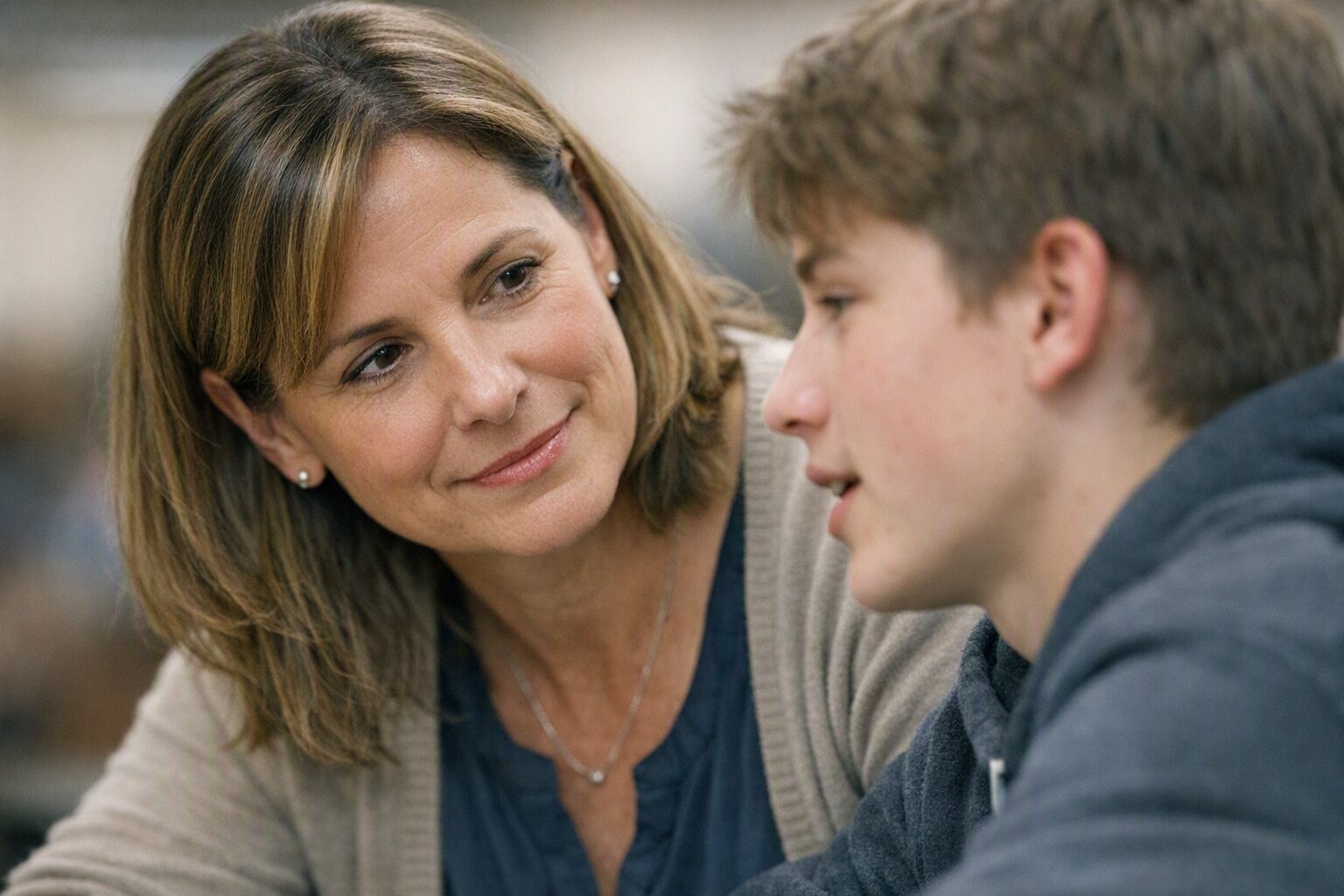
When Academy Award winner Sally Field said these words in her acceptance speech, the whole world smiled. She expressed the need for acceptance that everyone feels. If a person of this stature can doubt her standing among colleagues, imagine how many of our students feel in a classroom.
Dr. William Glasser, educator and child psychologist, developed a system to explain human behavior. In his system, the need to feel accepted ranks highly, coming second only to the need for safety.
These two needs are closely linked. Often students will feel accepted when the teacher displays a genuine effort to make sure they feel safe.
I have had the privilege of studying with three renowned educators who taught me important ways to make students experience a real sense of acceptance in the classroom.

Key Vocabulary
The first teacher was Sylvia Ashton-Warner, author of the book The Teacher. Sylvia describes her method of teaching indigenous Māori children to read.
Her method?
Listen to them.
That was it—listen. Really listen.
Not by using a list of words with similar vowel sounds. Not phonetics. Not sight words. None of the methods common in North America.
Sylvia would invite the student to tell her a story. She would listen carefully and select a word from the story. She would write that word on a piece of cardboard and store it in the child’s vocabulary box. Each child had their own box of words.
The next day, Sylvia would pull out the card and ask the child to read the word. If the child did not recognize the word, Sylvia would not tell them the word or chastise the child for not paying attention. She would apologize:
“I’m sorry I wasn’t paying careful enough attention to your story. Please tell it to me and I’ll listen very carefully.”
For example, if the story was about the child’s big sister:
“My sister had her boyfriend come to visit. They sat on our new couch and when they thought no one was looking, they kissed.”
If Sylvia had written the word couch and the child had not remembered it, she would try another word. The word usually spoken with more energy was “kissed.”
That word was remembered.
Sylvia called this method “key vocabulary.” The boxes of cardboard words, coming from the student’s own language, became the curriculum.
Sylvia discovered that key vocabulary words often related to strong emotion—fear or love. Absence of fear (safety) and acceptance (love) align closely with what Glasser described as primary human needs.
Let’s look more closely at Sylvia’s process.
In asking students to share their stories, she was honoring them. By listening carefully, she created a genuine feeling of acceptance.
Using student work as curriculum makes learning relevant. Each child has their own box. A deep sense of ownership is attached to it. Subtly, the locus of control shifts from the teacher to the student.
Power is shared.
Power is the third need guiding human behavior. Both Glasser and Bruno Bettelheim believed that many students fail in secondary classrooms because their need for power—control over themselves and their choices—is not met.
Sylvia insisted that teachers refrain from judging student stories:
“We have no right to judge the child’s mind. We are there to work with the words the student values.”
In developing this method, she invited the student into the teaching and learning process. It only works because the student is directly involved.
The student provides the curriculum.
It’s genius.
Traditional methods of showing acceptance don’t come close.
Saying “good job” is not enough.
“Well done.” “Hardworking.”
These often reflect the teacher’s satisfaction, not true student voice. The teacher remains in control and is making the judgment.

Wait Time
A second renowned educator, Mary Budd Rowe, taught me a similar strategy: the art of listening.
During the time of my doctoral work in Gainesville, Florida, questioning strategies were a major research focus. Inquiry was being studied, particularly in science education.
Mary Budd Rowe examined the questioning practices of highly effective secondary teachers.
What she discovered were brief but powerful pauses in dialogue.
These teachers paused—silently—after asking questions.
She measured these pauses and compared them to cognitive processing. It was remarkable.
“Wait Time” became widely known.
In the classroom, two types emerged:
- Wait Time 1: after asking a question
- Wait Time 2: after the student responds
In both cases, the teacher waits—at least three seconds—without interrupting.
No “good.”
No “that’s right.”
No moving on.
Just listening.
An amazing thing happened.
Students:
- Spoke longer
- Thought more deeply
- Increased participation
- Began to ask their own questions
Most teachers, however, wait only 0.9 seconds before speaking again.
Three seconds allows the brain to work at a deeper level.

Perceptual Psychology
Dr. Arthur Combs and Dr. Daniel Soper, building on earlier work by Dr. Donald Snygg, developed a phenomenological-perceptual model for understanding effective teaching.
Perception was defined as:
“The process of attributing meaning and significance to the immediate situation.”
The most effective teachers shared one key perception:
They saw students as able.
Teacher effectiveness is not about personality traits. It is about perception—how teachers see their students.
A logical conclusion follows:
Effective teachers wait longer because they believe their students are capable of thinking.
Given the opportunity, students rise.
The Meaning of Wait Time
Some interpreted wait time to mean simply counting to three.
It is not that simple.
Teaching is complex human interaction.
Wait time only works when the teacher’s thinking is aligned.
Not:
“I’m waiting because you weren’t listening.”
But:
“I’ll wait because I believe you have something to say.”
The message becomes:
You are able.
Takeaways
- Acceptance is a human need that must be satisfied
- Teachers often try to meet this need through praise
- Actions speak louder than words
- Using student work as curriculum demonstrates real acceptance
- Wait time allows deeper thinking and participation
- These strategies work when the teacher truly perceives the student as able
Frequently asked questions
How can teachers help students feel accepted?
Start by listening. William Glasser ranks the need to feel accepted second only to the need for safety, and students tend to feel accepted when the teacher works to make sure they feel safe. Sylvia Ashton-Warner showed how deeply listening to each child’s own stories can build acceptance.
What is “key vocabulary”?
Key vocabulary is Sylvia Ashton-Warner’s method for teaching reading. The child tells a story, the teacher picks a word from it, writes it on a card and keeps it in the child’s own box of words. Words tied to strong feelings, such as fear or love, were the ones children remembered.
Further reading
- Glasser Institute for Choice Theory
- Sylvia Ashton-Warner (Wikipedia)
- Mary Budd Rowe and wait time research (Wikipedia)