The issue I have grappled with is this: just how much planning should a teacher do to make a trek into nature both an educative and enjoyable experience?
My answer: not so much of this—but more of that.
Planning the Logistics
Let’s start with the “more of that.”
The forms need to be filled out, permissions obtained—of course. But there is a different kind of upfront planning I value even more. I’m not referring only to the “protect your behind” kind of planning. I mean taking the time to consider all the ways the event can offer the richest opportunity for enrichment.
You want the day to be as seamless as possible when it comes to travel, food, comfort, and safety.
It helps to imagine the day’s progression and actually visualize your students in that setting—doing whatever the experience offers. Consider as many “what ifs” as you can, and have solutions in mind before even mentioning the prospect of a field trip to your students.
If you have never been to the location you want to use, make a trip yourself first.
Planning the Experience
That’s the logistics.
Now—what about the experience itself?
What will students actually do once you’ve “landed”?
This is where my approach begins to differ.
I plan for many possible activities—but I do not depend on any specific one happening. I want choice. I want students to experience nature in ways they have never done before. I provide the materials—and let nature do the teaching.
My job is to create the opportunity for discovery.
Discover what?
I have no idea.
And that’s part of the point.
Against Overly Structured Lessons
I am strongly opposed to tightly structured exercises where the teacher assigns a task and the student dutifully complies.
I have seen many examples of this:
A poetry lesson in a park where students are asked to write a Haiku about what they see.
It sounds good. It encourages observation.
But to me, it misses something essential.
A Haiku is a highly refined art form. Even accomplished writers struggle to do it well. Why begin there?
Instead, I would ask students to simply talk about what they notice—and why it caught their attention.
Or walk quietly through a forest.
Forest walking.
Why is this practice so valued in Japan? Would silence deepen the experience? What might make the moment more meaningful?
One conversation leads to another.
And something important begins to shift.
When the locus of control moves from teacher to student, the world begins to open.
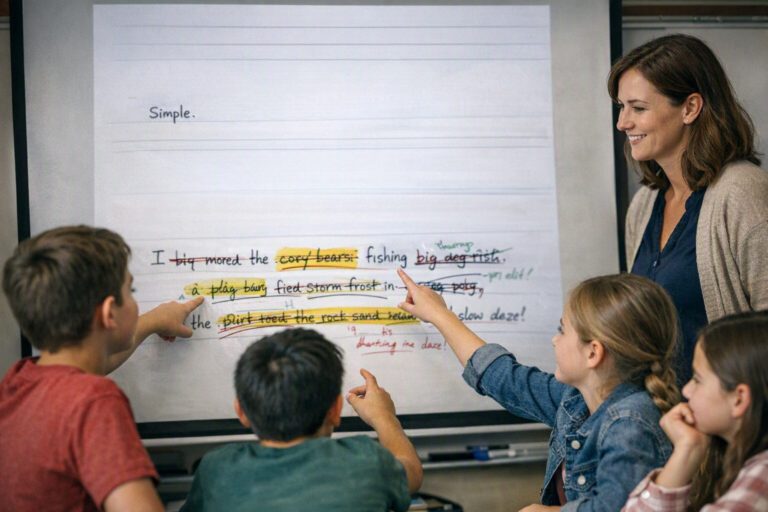
The Power of Wait Time
I was fortunate to work with Mary Budd Rowe, who introduced the concept of wait time.
When a teacher asks a question and waits longer than three seconds (the average pause), students think more deeply. Their responses move from simple recall to analysis.
If the teacher continues to wait—what Rowe called Wait Time Two—something even more powerful happens:
Students begin to ask their own questions.
The locus of control shifts again.
Why Field Trips Matter
Field trips are not an “extra.”
They are essential.
When we look at what is happening to our planet, I believe one of the most important things we can teach is awareness of the earth and its creatures—those with roots, wings, and four legs.
After all the effort required to organize a field trip, I want more from the experience.
I want students to feel the connection between humans and nature.
Work, Discovery, and Celebration
I prepare materials ahead of time—tools, supplies, possibilities.
Students may use them—or not.
The opportunity is what matters.
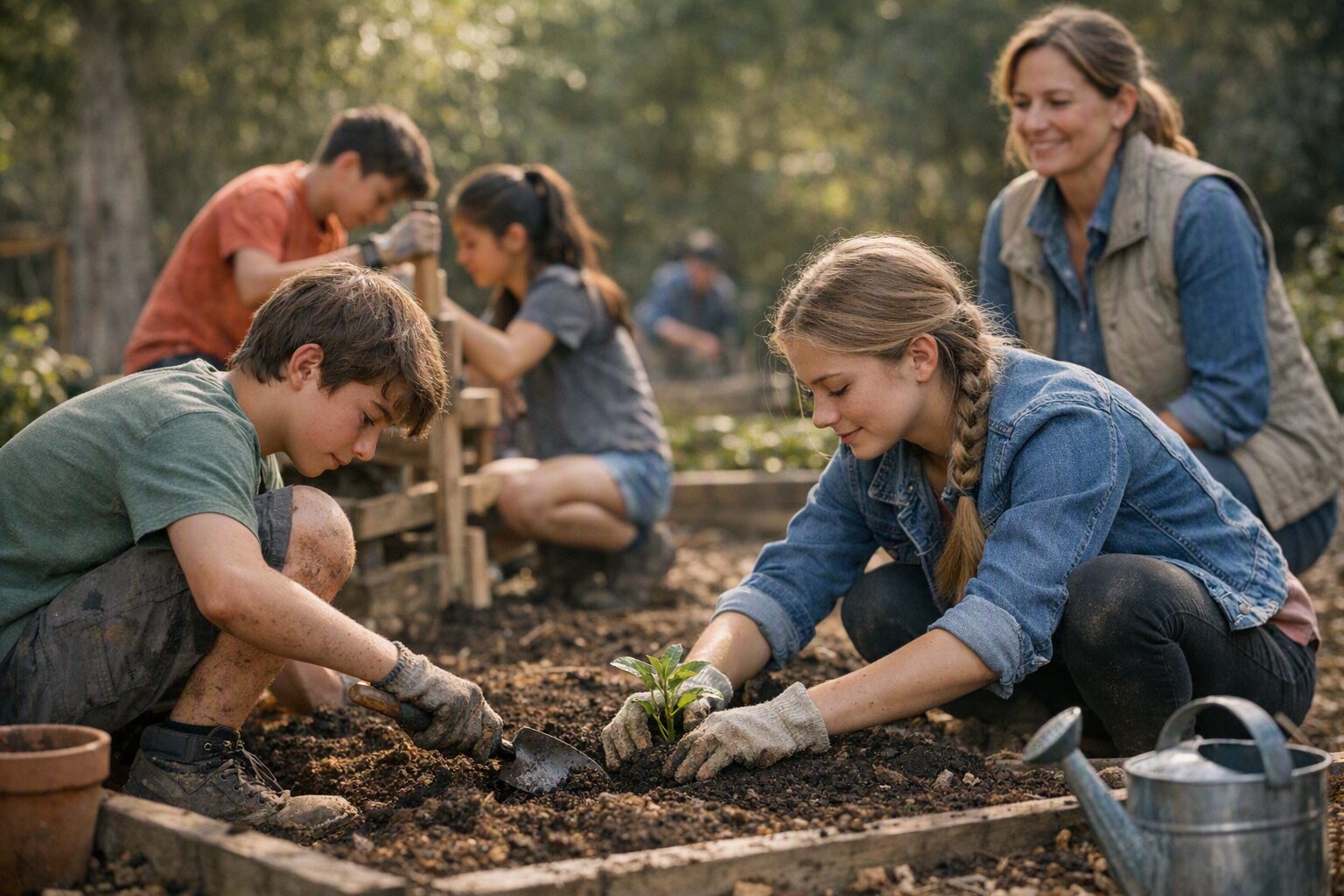
Together, my students have:
- Built rock walls
- Transplanted trees
- Weeded gardens
- Created fern beds
- Released paper lanterns
- Gathered eggs
- Groomed horses
And because they contribute to the work of the land, I invite them to prepare a shared meal.
Food is laid out—meat, vegetables, fruit, bread—and anyone who wishes can help cook.
The day becomes a celebration.
A Lesson from the Ferns
One group of students was asked to transplant large ferns.
Armed with spoons, they made very little progress.
When I checked on them, they had barely disturbed the soil.
They asked if they could stop—and perhaps watch a soccer game on their iPads.
“No internet,” I said. “We’re in the forest.”
I picked up a tool, cut into the soil, and lifted the fern free. One of the boys tried to hold it—and fell backward under its weight.
Laughing, they said:
“We are house boys. We have never done manual work. We have never been in the wild.”
I handed him the tool.
“There’s never a better time to change that story.”
Watching them dig—talking, laughing, learning—was something I will never forget.
This Is Teaching
It is not about assigning.
It is not about controlling.
It is about creating conditions in which students:
- Experience
- Discover
- Contribute
- Connect
Reconsidering Structure
I have seen many teachers schedule field trips at the end of the year.
Students are excited. Summer is close.
So we assign a poem.
Perhaps a Haiku.
And we call it learning.
Forgive me—but this breaks my heart.
Field trips have become:
- Difficult (because of bureaucracy)
- Trivial (because of how we use them)
They can be so much more.
A Different Approach
Real work. Work that matters.
- Cleaning a stream
- Planting trees
- Restoring land
- Growing food
This is learning.
Yes—the planning is more complex.
Yes—it requires tools and preparation.
But there is one crucial difference:
I don’t decide exactly what each student will do.
I create opportunities.
They choose their path.
And I’ve done this more than fifty times.
Every time—it works.
Final Thought
Once students experience meaningful work in nature, something changes.
Their relationship with:
- The land
- Each other
- Themselves
is never quite the same again.
And that, to me, is worth every permission form.
Frequently asked questions
How much planning does a field trip need?
More logistics planning and less activity planning. Get the forms and permissions done, picture the day, solve the “what ifs” and visit the location first. Then plan many possible activities without depending on any one of them.
What is wait time?
Mary Budd Rowe found that when a teacher waits longer than about three seconds after asking a question, students think more deeply. Waiting longer still, called Wait Time Two, leads students to ask their own questions.
Further reading
- Mary Budd Rowe and wait time research (Wikipedia)
- ASCD: professional learning and publications for educators