
There has been a great deal written about learning styles, and with good reason. Human beings do not all take in the world in the same way. As teachers, we sense this intuitively, even if we do not always have the language to describe it.
When we ask what is the most important learning style difference a teacher should pay attention to, there is no single right answer — but there is, I believe, one difference that stands out as foundational.
Drawing on Jungian psychological theory and the work of Isabel Myers, I return again and again to the distinction between Sensation and Intuition. These are not learning styles in the trendy sense. They are two fundamentally different ways of perceiving reality.
Sensation and Intuition: Two Ways of Knowing the World
Sensation is a direct, concrete way of perceiving. It focuses on what is here and now: facts, details, specifics. Sensing students like clarity. They enjoy repetition, step-by-step instruction, and moving carefully from the known to the unknown. Current research suggests that as many as 75% of students in elementary and secondary schools are sensing types.
Sensing students:
- Prefer clarity and structure
- Learn step-by-step
- Move carefully from the known to the unknown
- Want practical application
They learn best when:
- Instruction is broken into manageable steps
- There is time for practice and repetition
- Learning connects to real, practical outcomes
They tend to struggle when:
- Theory is abstract or disconnected
- Expectations are unclear
- Evaluation relies heavily on inference or interpretation
Intuition, by contrast, scans rather than focuses. It looks for patterns, relationships, and possibilities. Intuitive students are energized by theory, metaphor, and the question “What could this become?” They enjoy big ideas, future implications, and linking past, present, and possibility.
It looks for:
- Patterns
- Relationships
- Possibilities
Intuitive students ask:
“What could this become?”
They:
- Enjoy big ideas and concepts
- Thrive on exploration and connections
- Prefer variety over repetition
- Often work in bursts of energy
They may struggle with:
- Repetition
- Detail-heavy instruction
- Tasks with no clear larger purpose
These are not better-or-worse distinctions. They are simply different.
The complication is this: many teachers — especially secondary and university teachers — prefer intuition over sensation. We tend, quite unconsciously, to teach the way we ourselves learned best. We ask big questions. We emphasize meaning over detail. And without intending to, we may leave the majority of our students struggling to understand what is being asked of them.

The Teacher’s Blind Spot: Teaching How We Learn
One of the most persistent illusions in education is the belief that students learn the way we do. If you are a sensing teacher, you are likely to design very specific objectives and assignments. If you are intuitive, you are more likely to frame learning around questions, themes, and exploration.
Neither approach is wrong — but each reflects a preference.
The danger lies in assuming that preference equals universality.
This is why I have always said: the answer is choice.
Curriculum That Breathes: Choice, Variety, and Contract Learning
In my own classrooms, I used a contract-learning approach. Every few months, students designed a major learning contract. They chose a topic to study in depth, explained why it mattered to them, and outlined how they would demonstrate their learning. We discussed the contract together. I checked in with them — and occasionally, they checked in with me.
It worked beautifully.
Why? Because it honored difference. It allowed sensing students to ground themselves in facts and structure, and intuitive students to follow connections and meaning. Most importantly, it returned a measure of agency to the learner.
The subject matter may be mandatory. The path to understanding it does not have to be.
A Classroom Story: When a Question Isn’t Really a Question
Let me offer a concrete example.
My daughter Michelle is strongly sensing in her orientation. When she was in Grade 10, she was studying Paul’s Case — a short story about a young man alienated from his family, troubled by his identity, who stole money, ran away from home, and ultimately took his own life.
The teacher assigned a series of questions. Michelle had no difficulty with the first ten — each one specific, factual, and easily supported by the text.
Then came the final question:
What would have happened to Paul if he had not run away, but had stayed to face the music?
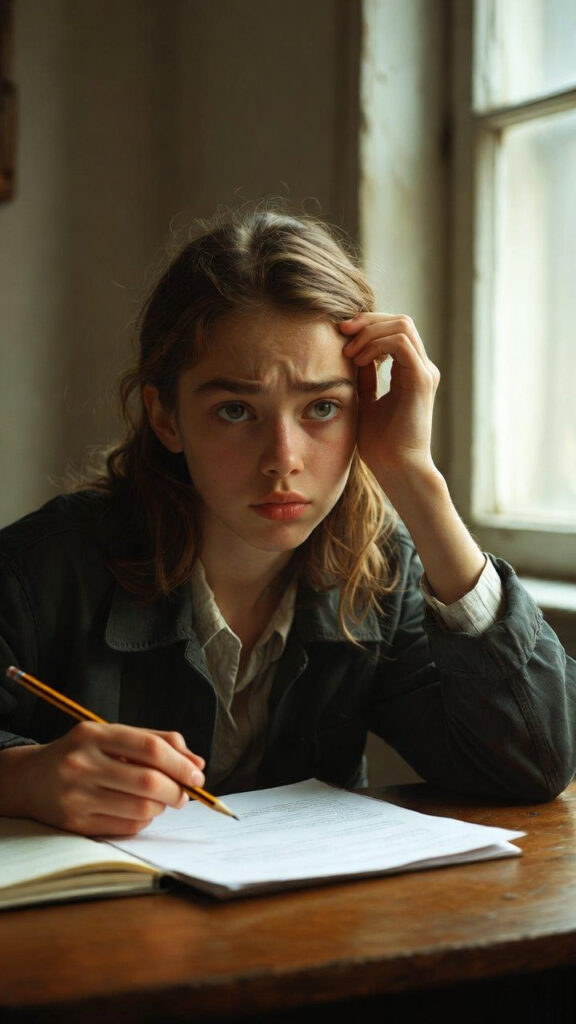
Michelle skipped it.
Surprised, I asked her why. “It’s a stupid question,” she told me.
When I asked why, she replied, quite reasonably, “He died. How can I know what would have happened? The story doesn’t say. Why is the teacher asking me to make something up?”
As a teacher and an intuitive, I understood what the teacher intended: use the facts you know about Paul to make an educated inference. But that was never actually stated.
Once I reframed the task — List everything you know about Paul that might affect what happened if he returned home — Michelle immediately understood. From there, she could reason toward a plausible answer.
The issue was not intelligence. It was perception.
For an intuitive student, the original question is exciting. For a sensing student, it is confusing unless the reasoning process is made explicit.
Wording Matters: Making Thinking Visible
This is why the wording of questions matters so much. When we ask students to infer, synthesize, or imagine outcomes, we must give sensing students a bridge: facts first, then interpretation.
Intuitive students thrive on connection. They want to know how one idea leads to another, how pieces form a pattern, how meaning emerges. Asking them only factual questions feels, to them, pointless.
A balanced classroom includes both:
- Questions that reward accuracy and attention to detail
- Questions that invite interpretation, connection, and possibility
Even better, invite students to create the questions themselves. Ask them to design an exam to test understanding of a text. Post the questions around the room. Let students choose which ones to answer.
You will quickly see how learning style shapes curiosity.
The Moral Dimension of Teaching
Students spend most of their school lives in perception mode — trying to understand, absorb, and make sense of material chosen by others. Teachers hold most of the judgment: we decide what matters, how it is assessed, and when it is complete. Students rarely get to decide.
As teachers and decision makers, we are working in a domain that is not only cognitive. It is moral.
If we know that students differ in how they perceive the world, and we ignore that knowledge, we are no longer innocent. We are making a choice.
Once you know better, fairness demands more.
I do not believe that students should always be forced to work in a style that is unnatural to them — especially when they are just beginning, feeling uncertain, or when getting it right matters deeply. That is the time to let them work where they are strongest. Exploring alternate ways of understanding is valuable, but it should come later, when confidence is established and exploration is safe.
Not everything needs to be evaluated. Some learning is simply practice in becoming a more complex human.
Teaching Difference Is Teaching Humanity
When sensing and intuitive students work together, they begin to see that difference is not deficiency. They learn how other minds work. They practice respect, curiosity, and empathy.
This, too, is education.
Isabel Myers understood this deeply. So did Mary McCauley, who once advised me — during my doctoral work — not to focus on extraversion and introversion, but on sensation and intuition. “That’s where the action is,” she said.
Forty years later, I believe she was right.
If students are perceiving 90% of the time, then how they perceive matters. And how we honor that perception may be one of the most important — and most ethical — acts of teaching we can offer.

Key Takeaways
- The most important learning style distinction is not about personality or preference — it is about perception. Sensing students need facts, structure, and explicit steps. Intuitive students need patterns, meaning, and possibility. Most classrooms are designed for only one.
- Teachers unconsciously teach the way they learn. Recognizing your own perceptual preference is the first step toward reaching the students who think differently than you do.
- The wording of questions is not a small detail — it is the difference between a student engaging and a student shutting down. Give sensing students a bridge: facts first, then interpretation.
- Offering students choice in how they demonstrate their learning is not just good pedagogy. It is an ethical responsibility. Once we know that students perceive the world differently, ignoring that knowledge is a choice — and fairness demands more.
Frequently asked questions
What is the difference between sensing and intuitive learners?
Sensing students focus on facts, details and step-by-step instruction. Intuitive students look for patterns, relationships and possibilities. Neither is better; they are simply different.
How many students are sensing types?
The article cites current research suggesting that as many as 75% of elementary and secondary students are sensing types, while many secondary and university teachers prefer intuition.
How can teachers meet both kinds of learners?
Offer choice. The author used contract learning, where students choose a topic, explain why it matters and design how they will show their learning, and asks both detail questions and interpretation questions.
Further reading
- Pashler, McDaniel, Rohrer and Bjork, “Learning Styles: Concepts and Evidence” (Psychological Science in the Public Interest)
- The Myers & Briggs Foundation
- Carl Jung (Encyclopaedia Britannica)