Hey, English Teacher,
Today I’d like to share some tricks of the trade around writing the opening to a composition.
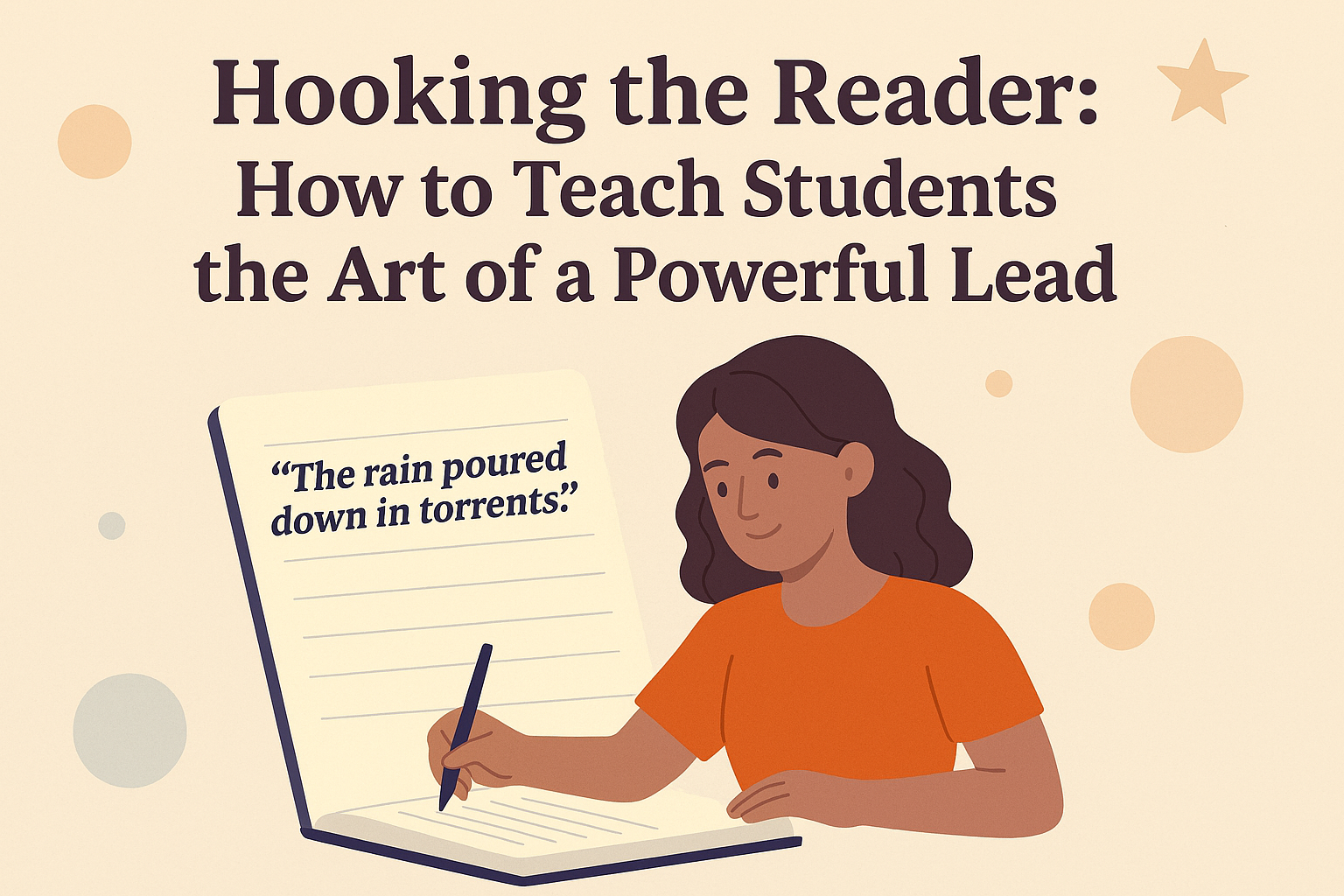
What is the “job” of the lead? It’s to make a window shopper want to buy. It’s a calling card. It tells the reader what the story is going to be about and the style the writer is going to use.
Because of this, the writer has an obligation to follow through. If you are going to write a sad story, it won’t do to start with some up beat imagery and language. If you really want to write about how your mother’s worrying about your possibly getting some peanuts, which you are deadly allergic to, during home EC class, it isn’t fair to start your story with ,”the cake smelled wonderful, chocolate filling the small classroom” UNLESS, of course, there were peanuts in that cake.
There are wonderful examples of good lead sentences in literature. The children’s book, “The Velveteen Rabbit” starts with… “There was once a velveteen rabbit, and in the beginning he was really splendid.” Well, we all know that things will change.
Camus starts with “Mother died today. Or maybe it was yesterday, I don’t know.” and we are really wondering what the relationship between the main character and his mother – and other humans he meets might have been like.
When we read “The last camel collapsed at noon” we know the people in Ken Follett’s The Key to Rebecca were in a lot of trouble.
Instead of giving your students the so often quoted rule found in text books that suggests the writer “start their essay or story with a purpose line” how about giving some information about the “job” a lead will do, about how it will affect the reader instead?
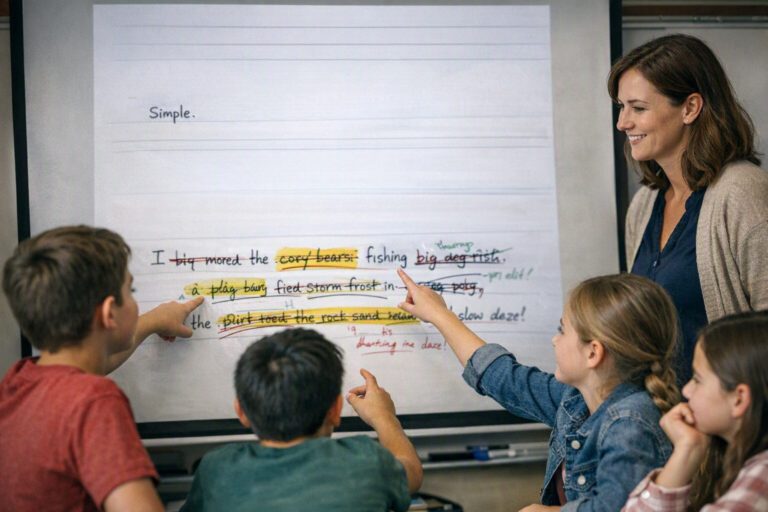
Young writers enjoy making a game of creating lead paragraphs. What is the mystery in your opening paragraph? If a person had to guess what your story was about, what do you think they would guess?” Will the reader know who your main character is?
The Asian students I taught struggled with the concept of theme or mood in a story; so I asked the question: If you were going to put music to your story, what song might you choose to match the mood or theme of your story?
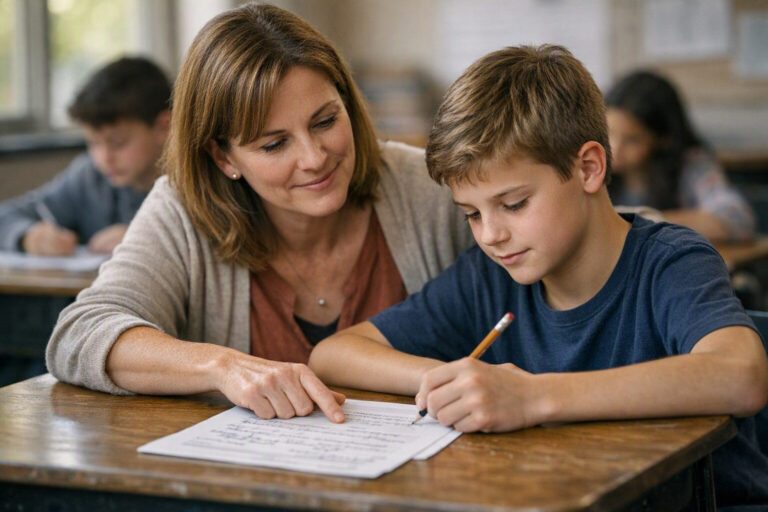
This idea of music that suited their composition made sense to them and they especially enjoyed having the opportunity to read their stories to the class while the music they selected played softly in the background. Shy students and those not yet comfortable with reading aloud in a different language, English not being their first language, were hesitant to read aloud in front of the class. They had the option of recording their own voices or inviting a class member to read for them. A wise teacher is aware of what makes their students uncomfortable and give them options. In the end, students will become more willing to participate when they are not forced into a situation before they are ready.
Why have them have them share stories at all? It is important to share stories. Why? It brings the class together. It is evidence of how we all share universal feelings of joy, neglect, disappointment, surprise. Sharing celebrates the writing.

Key Takeaways
- The Opening Matters: The lead (opening) of a composition is crucial—it sets the tone, hints at the story’s direction, and should intrigue the reader, much like a shop window entices a passerby. Writers must ensure their opening matches the mood and theme of their story to maintain trust with the reader.
- Go Beyond Textbook Rules: Instead of relying on formulaic advice like “start with a purpose line,” teachers should help students understand the real “job” of a lead—how it shapes the reader’s expectations and emotional engagement.
- Creative Engagement Works: Activities such as matching music to a story’s mood, or allowing students to share their stories in different ways (reading aloud, recording, or having a peer read) can make writing more accessible and enjoyable, especially for students who are shy or learning English as an additional language.
- Sharing Builds Community: Sharing stories in class isn’t just about showcasing writing—it helps build a sense of community, celebrates universal emotions, and gives students a sense of pride and belonging. Inviting storytellers or organizing group sharing sessions can make students feel like stars and foster a supportive learning environment.
In an undergraduate course I developed for students having difficulty in writing, I hired a professional story teller to read (tell) the stories to not only the class which the author attended, but to all modules of that class, which were 160 students who gathered together every three months for story sharing. Students loved this part of the program. They became the stars of the show. If you want to read more about this writing program, Mamchur, C. & Shaw, C. (2014). An Ethnographic Examination of a Course in Academic Literacy for At-Risk Students. Arts and Humanities in Higher Education CFP: Journal of Educational Policies and Current Practice, 1(1), 41–56. an article is available on imesustainability.com